Gallery
March 7, 2024
Shawia Hairstyle
Gallery
March 7, 2024
Shawia Hairstyle
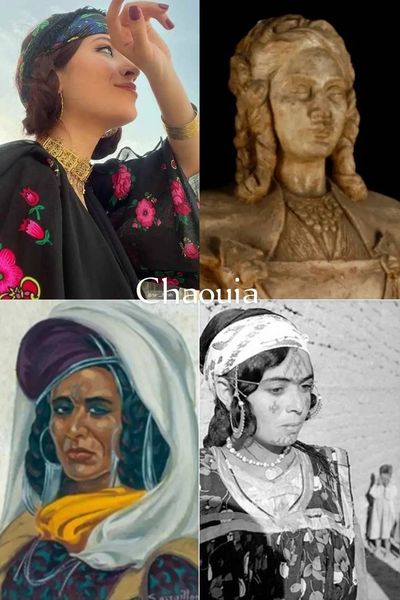
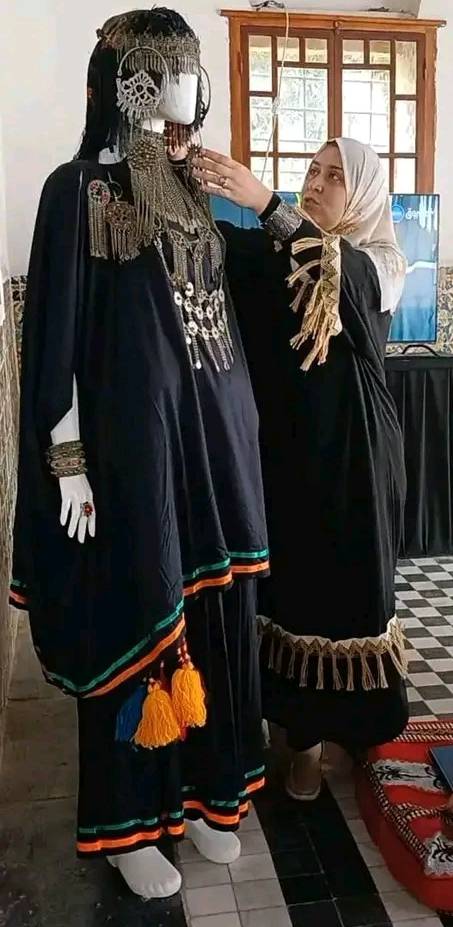
#Shawia_Hairstyle #Auresian_Hairstyle We present one of the most prominent elements of Shawia cultural heritage: the Shawia hairstyle, which consists of two braids tied at the back in a simple and elegant design that reflects the authentic identity of the Auresian people.
Historical Documentation:
This hairstyle was not just part of everyday adornment but has been immortalized in ancient sculptures and artistic works, such as images, drawings, and engravings. Even the Greeks, influenced by neighboring cultures, documented this hairstyle as part of the ancient Libyan heritage on a fragment associated with a pagan goddess connected to nature, forests, and the moon. Going even further back, the hairstyle was linked to the primordial goddess Gaia, the symbol of earth and fertility.
Continuity Across Ages:
The Shawia people have preserved this traditional hairstyle as part of their cultural identity, passed down as a lasting legacy from their Numidian ancestors, as evidenced by artifacts. The earliest visual documentation of this hairstyle dates back to the 19th century, with modern images showing its continuity in rural areas and villages to this day, making it a deeply rooted symbol in the collective memory of the Shawia people.
Authentic Identity:
This hairstyle is not a product of the 16th century nor an external influence; it is a natural extension of the Numidian-Libyan culture that dates back thousands of years. Attempts to alter its identity or claim it as foreign contradict historical evidence and engravings that document it as an integral part of the rich Amazigh heritage.
Significance Today:
Despite its simplicity, the Shawia hairstyle expresses a profound connection to cultural identity and roots. Today, it remains present in traditional celebrations and events as a symbol of authenticity and natural beauty, characteristic of Shawia women.
#Shawia #Khenchela #Batna #Oum_El_Bouaghi #Tebessa #Biskra #Souf
#Souk_Ahras #Setif #Bordj_Bou_Arreridj #Constantine #Annaba #Guelma
#Amazigh #Libyan #Numidians #Masyles
#Algeria #Tunisia #Libya"
Historical Documentation:
This hairstyle was not just part of everyday adornment but has been immortalized in ancient sculptures and artistic works, such as images, drawings, and engravings. Even the Greeks, influenced by neighboring cultures, documented this hairstyle as part of the ancient Libyan heritage on a fragment associated with a pagan goddess connected to nature, forests, and the moon. Going even further back, the hairstyle was linked to the primordial goddess Gaia, the symbol of earth and fertility.
Continuity Across Ages:
The Shawia people have preserved this traditional hairstyle as part of their cultural identity, passed down as a lasting legacy from their Numidian ancestors, as evidenced by artifacts. The earliest visual documentation of this hairstyle dates back to the 19th century, with modern images showing its continuity in rural areas and villages to this day, making it a deeply rooted symbol in the collective memory of the Shawia people.
Authentic Identity:
This hairstyle is not a product of the 16th century nor an external influence; it is a natural extension of the Numidian-Libyan culture that dates back thousands of years. Attempts to alter its identity or claim it as foreign contradict historical evidence and engravings that document it as an integral part of the rich Amazigh heritage.
Significance Today:
Despite its simplicity, the Shawia hairstyle expresses a profound connection to cultural identity and roots. Today, it remains present in traditional celebrations and events as a symbol of authenticity and natural beauty, characteristic of Shawia women.
#Shawia #Khenchela #Batna #Oum_El_Bouaghi #Tebessa #Biskra #Souf
#Souk_Ahras #Setif #Bordj_Bou_Arreridj #Constantine #Annaba #Guelma
#Amazigh #Libyan #Numidians #Masyles
#Algeria #Tunisia #Libya"
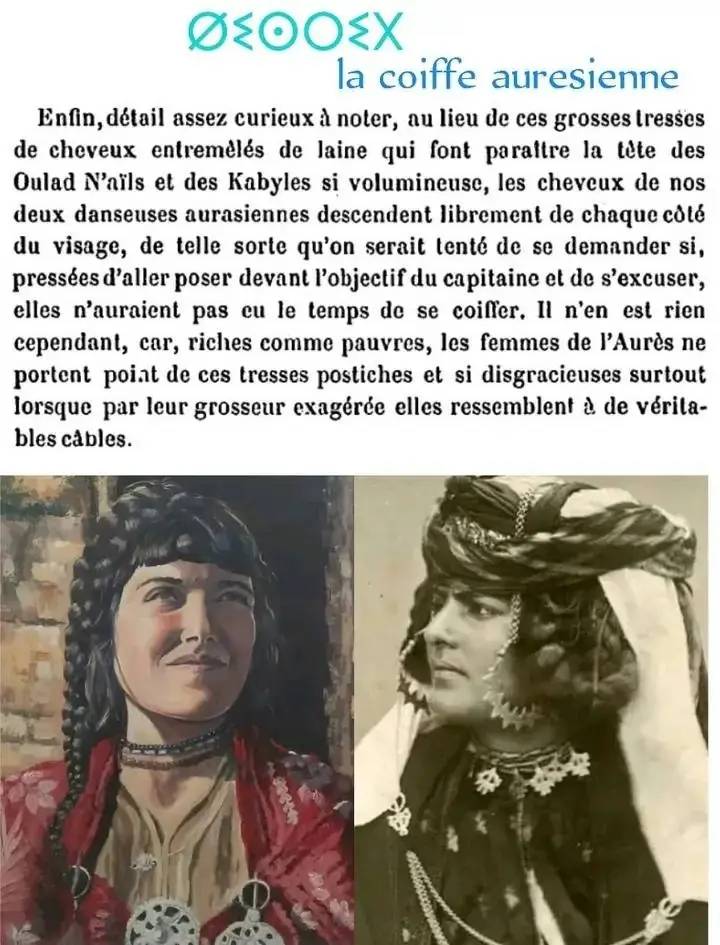
#Shawia_Hairstyle #Auresian_Hairstyle We present one of the most prominent elements of Shawia cultural heritage: the Shawia hairstyle, which consists of two braids tied at the back in a simple and elegant design that reflects the authentic identity of the Auresian people.
Historical Documentation:
This hairstyle was not just part of everyday adornment but has been immortalized in ancient sculptures and artistic works, such as images, drawings, and engravings. Even the Greeks, influenced by neighboring cultures, documented this hairstyle as part of the ancient Libyan heritage on a fragment associated with a pagan goddess connected to nature, forests, and the moon. Going even further back, the hairstyle was linked to the primordial goddess Gaia, the symbol of earth and fertility.
Continuity Across Ages:
The Shawia people have preserved this traditional hairstyle as part of their cultural identity, passed down as a lasting legacy from their Numidian ancestors, as evidenced by artifacts. The earliest visual documentation of this hairstyle dates back to the 19th century, with modern images showing its continuity in rural areas and villages to this day, making it a deeply rooted symbol in the collective memory of the Shawia people.
Authentic Identity:
This hairstyle is not a product of the 16th century nor an external influence; it is a natural extension of the Numidian-Libyan culture that dates back thousands of years. Attempts to alter its identity or claim it as foreign contradict historical evidence and engravings that document it as an integral part of the rich Amazigh heritage.
Significance Today:
Despite its simplicity, the Shawia hairstyle expresses a profound connection to cultural identity and roots. Today, it remains present in traditional celebrations and events as a symbol of authenticity and natural beauty, characteristic of Shawia women.
#Shawia #Khenchela #Batna #Oum_El_Bouaghi #Tebessa #Biskra #Souf
#Souk_Ahras #Setif #Bordj_Bou_Arreridj #Constantine #Annaba #Guelma
#Amazigh #Libyan #Numidians #Masyles
#Algeria #Tunisia #Libya"
Other Blogs
Other Blogs
Check our other project Blogs with useful insight and information for your businesses
Other Blogs
Other Blogs
Check our other project Blogs with useful insight and information for your businesses
Other Blogs
Other Blogs
Check our other project Blogs with useful insight and information for your businesses